
- Resources
- Solutions
- Industries
- AI Tools
- Company
For procurement and engineering teams.
Understand where pricing stands, compare suppliers with context, and make confident decisions - without guesswork.
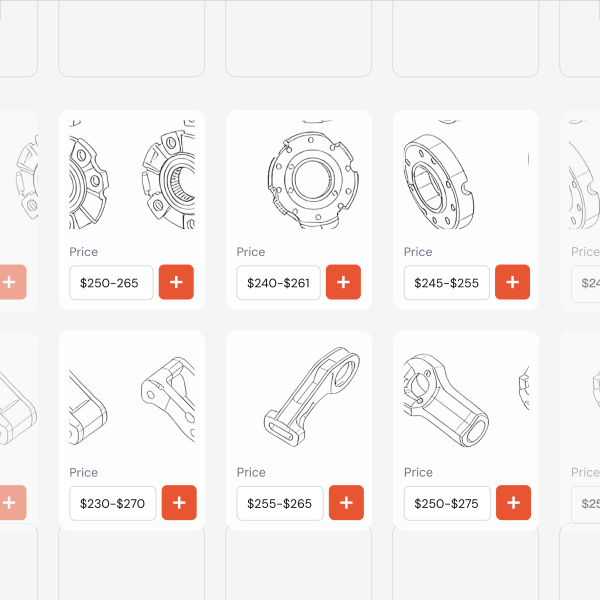
Buyers don’t choose the lowest price - they choose the safest option. Without context, expensive suppliers win by default.

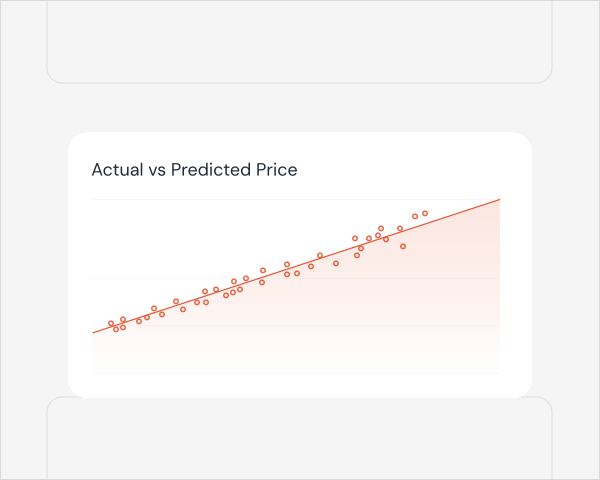
Compare supplier pricing against real benchmarks - not just against each other.

Understand cost alongside supplier fit, timelines, and past performance.

Start from structured, comparable data - not fragmented quotes and assumptions.

Each sourcing decision builds pricing benchmarks, supplier intelligence, and sourcing patterns you can reuse.

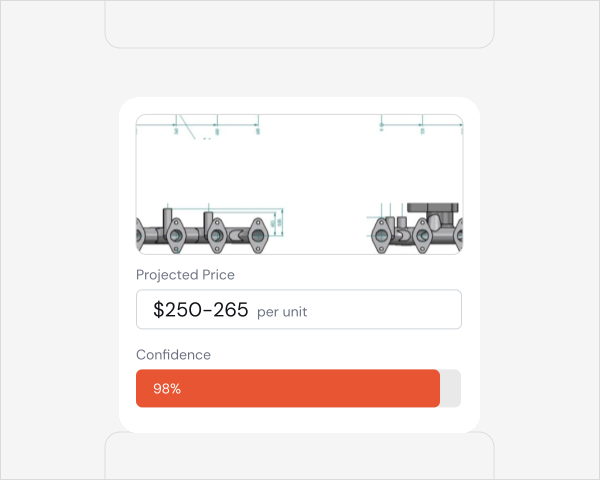
Understand where each supplier stands relative to market benchmarks and similar parts - so you don’t negotiate blindly.
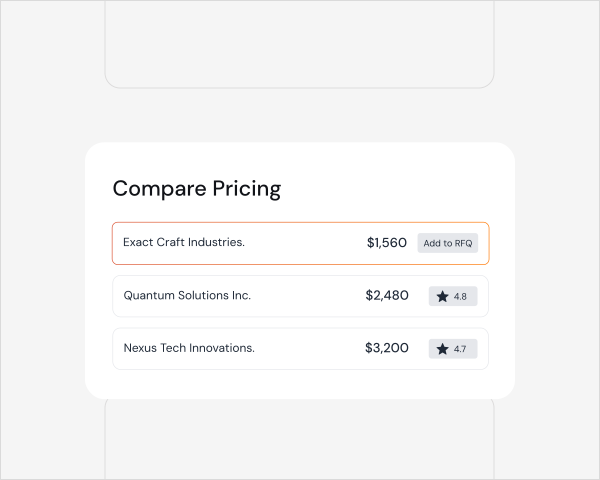
See aligned pricing across suppliers based on the same requirements - without manually normalizing quotes.
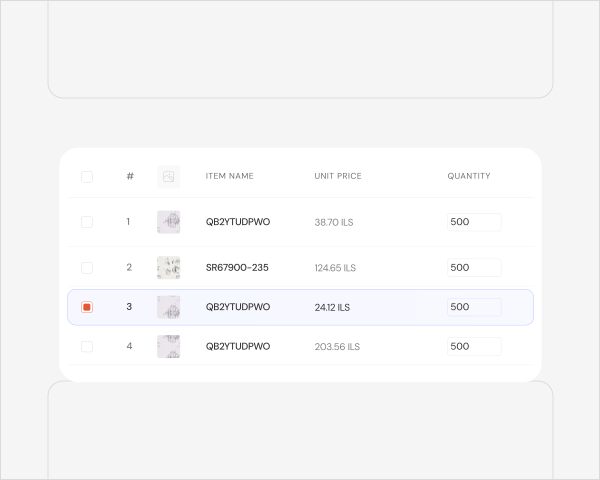
Track how similar parts were priced, who delivered, and what changed - so future decisions start with context.
Every RFQ adds data - making future sourcing faster, clearer, and more predictable.

Make expert-level pricing decisions - without being a mechanical expert.

Understand cost implications and make sourcing decisions - without relying on procurement expertise.

Because every quote is different – different assumptions, formats, and levels of detail.
Across engineering and procurement teams, this creates delays, confusion, and decisions that rely on follow-ups instead of clear data.
Pricing is shown in context – across suppliers, similar parts, and past projects.
You don’t just see numbers – you see where they stand.
You’re not relying on instinct or fragmented information.
With structured comparisons and market context, you can challenge pricing – or accept it – with confidence.
Yes. SOURCIX makes technical requirements and cost drivers clear, so procurement can make expert-level decisions without needing to interpret engineering details.
Yes. Engineers can understand pricing, supplier fit, and tradeoffs – without relying on procurement to translate the commercial side.
Because sourcing doesn’t break at the quote level – it breaks across the project.
Information is scattered, decisions require follow-ups, and context is lost.
SOURCIX keeps everything structured in one place – so sourcing is easier to run, revisit, and improve over time.
Every RFQ adds data – supplier performance, pricing benchmarks, and sourcing patterns.
Over time, your team builds a system that makes faster and better decisions with each project.


















Stop choosing between “safe” and “cheap.”
Make decisions with context, leverage, and confidence.