
- Solutions
- Industries
- Resources
- AI Tools
- Company
SOURCIX Price Analysis predicts realistic cost ranges for custom mechanical parts using market data and your company’s procurement history - before any RFQ is sent. Enter every supplier negotiation with a defensible cost baseline.
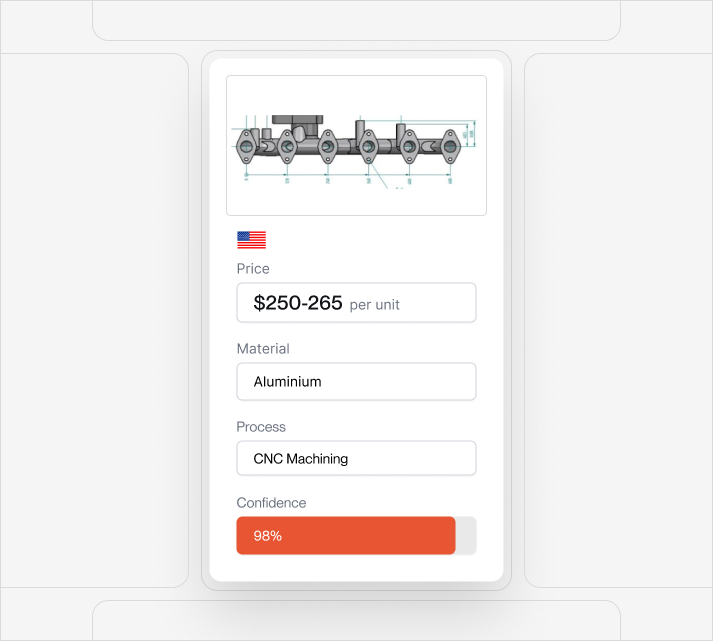
Upload a technical drawing, 3D model, or structured BOM.

The system analyzes material, geometry, tolerances, manufacturing process, and region. It combines external market data with your historical spend.
Receive a predicted cost range, benchmark comparison, and variance flags before releasing the RFQ.

Without a reference point, supplier quotes are difficult to evaluate and easy to accept.
Supplier quotes arrive without a clear benchmark, forcing buyers to rely on judgment instead of data.
Material grade, machining complexity, and tolerance impact pricing - but are rarely quantified before negotiation.
Years of historical pricing exist inside internal systems but rarely translate into predictive cost guidance.
Similar parts across plants or divisions are quoted independently, reducing purchasing leverage.
Price Analysis combines multiple data sources to estimate realistic cost ranges.
Predicts cost ranges based on material, manufacturing process, complexity, region, and production volume.
The system learns from historical quotes, awarded suppliers, and order volumes to reflect your organization’s actual purchasing patterns.
Identifies comparable parts in your catalog and shows how pricing changed based on specifications, suppliers, and order volume.
Highlights quotes that exceed predicted ranges or conflict with expected cost drivers.
Analyzes how geometry, tolerances, material selection, and manufacturing method influence cost to explain pricing differences across similar parts.


Price Analysis connects technical design decisions with commercial sourcing outcomes.
Enter supplier negotiations with a defined cost range and structured data to support pricing discussions.
Understand how materials, tolerances, and geometry influence manufacturing cost before releasing drawings.
Track custom part spend patterns and identify opportunities for consolidation and savings.















When buyers lack a cost reference point, supplier quotes become difficult to challenge. Price Analysis gives your team the data needed to evaluate pricing and negotiate with confidence.